


Responsible Wildlife Photography on an Indian Safari
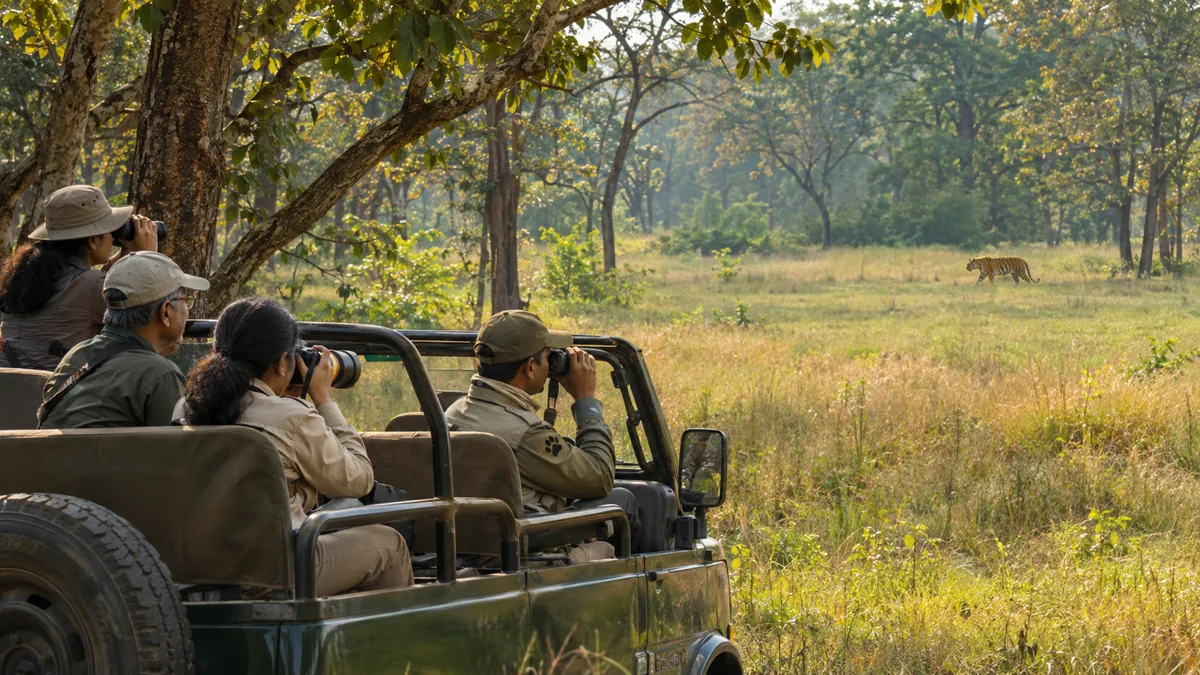
A calmer approach to photographing animals that puts habitat and guide instructions first.
Let the animal set the pace
A strong wildlife photograph begins with observation. On a safari, watch how an animal moves and behaves before lifting the camera. A tiger crossing a distant clearing, a deer listening at the forest edge or a bird settling on a branch can all tell a story without a close approach. Ask your guide to stop only where vehicles are permitted and give every animal room to choose its own route.
Use the lens, not the vehicle, to get closer
A longer lens or a careful crop can frame a subject while the vehicle remains at a respectful distance. Avoid asking a driver to block a path, pursue an animal or move for a better angle when doing so would interrupt normal behaviour. The National Tiger Conservation Authority describes tourism in tiger reserves as responsible travel that should support conservation and local communities; a photograph is never worth disturbing the place you came to see.
Make the habitat part of the picture
Wide frames can show grasses, sal forest, water or the light of an early morning drive. These details explain why a species lives there and often create a more memorable image than a tightly cropped portrait. Carry spare batteries and a cloth for dust, keep your gear contained inside the vehicle and turn off sounds that distract other visitors.
Leave with a better story
Sightings are unpredictable. A trip can still be rewarding when you record tracks, changing vegetation and the work of a knowledgeable local guide. Do not publish a precise location for a sensitive nest or den. Share the place and its conservation story without turning a wild animal into a target for the next crowd.
Further reading: National Tiger Conservation Authority tourism guidelines.