


Reading the Wildlife of the Sundarbans Mangroves
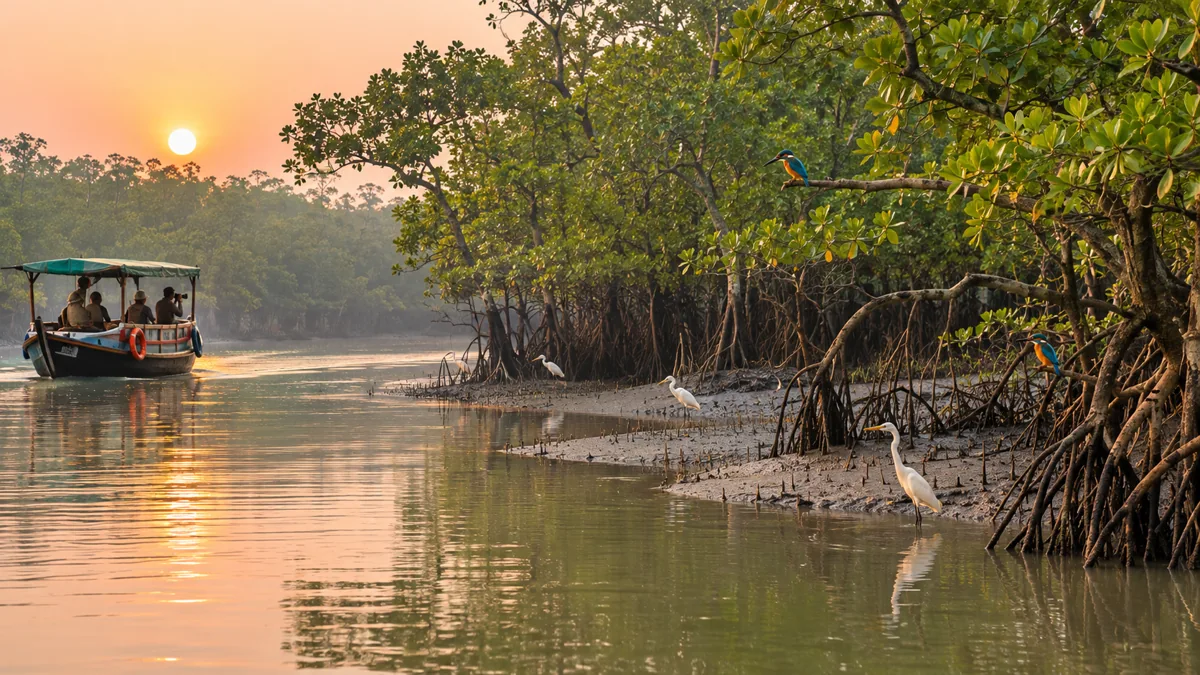
What tidal creeks, mangrove roots and patient boat travel reveal about a remarkable habitat.
A forest shaped by water
The Sundarbans is a landscape of tidal waterways, mudflats and mangrove islands. The changing water level alters what a visitor can see from a boat: exposed roots at one hour may be covered later, while birds shift between banks and channels. UNESCO describes the Indian park as part of the world’s largest mangrove forest area and a habitat for tigers, birds, reptiles and aquatic wildlife.
Notice the small signs first
A kingfisher waiting over a creek, egrets along a muddy bank and crabs among the roots can be easier to notice than a large mammal. Look for the shape of leaves, breathing roots and the way channels branch. These observations help explain how wildlife uses the forest even when a tiger remains out of sight. A guide can identify what is safe to observe from the permitted route.
Keep boat travel gentle
Stay seated where your guide asks, keep voices low and avoid throwing food or rubbish into the water. A boat should not crowd a resting bird or approach wildlife for a photograph. Tide, weather and local rules can change a route, so build flexibility into a visit and check current arrangements with authorised operators before travelling.
Value the whole ecosystem
The Sundarbans is not only a place to search for a famous species. Its mangroves connect land and water, shelter young aquatic life and help hold muddy shores together. A patient journey that notices those relationships gives a fuller picture of why protecting the habitat matters.
Further reading: UNESCO Sundarbans National Park.