


Why Wildlife Corridors Matter for India’s Tigers
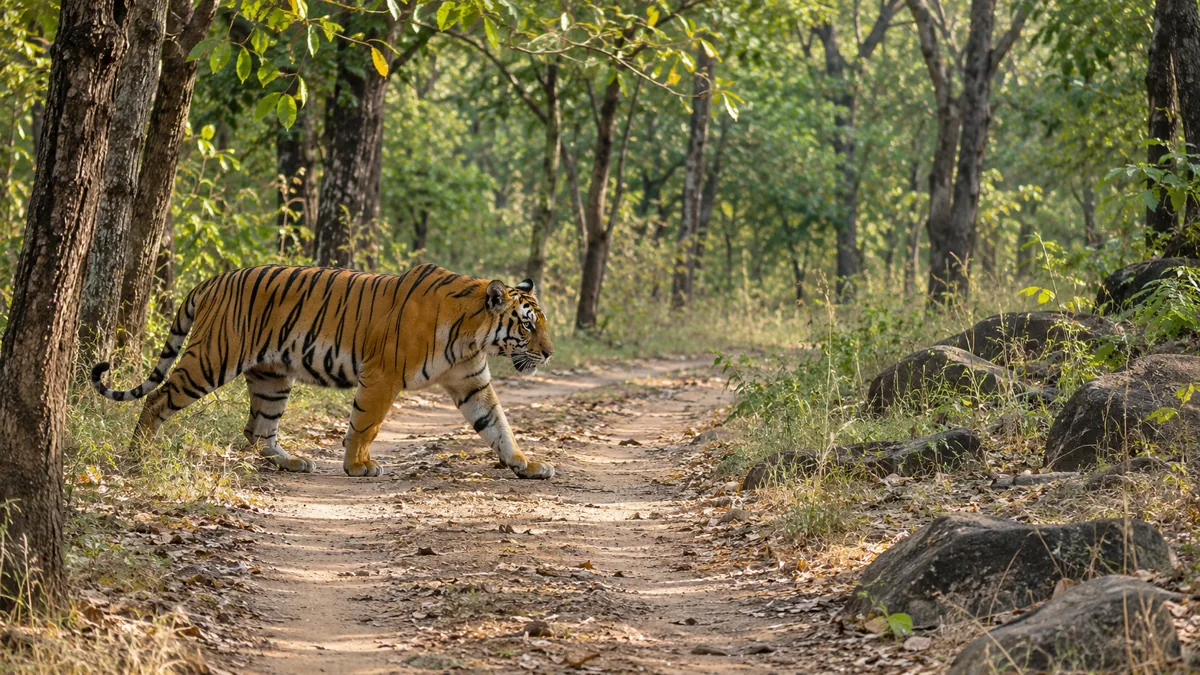
How connected forests support tiger movement and safer landscapes.
The landscape beyond reserve boundaries
A tiger reserve protects a core habitat, but an animal’s range does not end at a marked gate. Young tigers may disperse to find territory, while prey and other wildlife move between patches of forest. When those patches become isolated, populations have fewer safe routes and conflicts can increase at the forest edge.
What the official mapping tells us
India’s National Tiger Conservation Authority and Wildlife Institute of India have identified 32 major tiger corridors. Their corridor guidance looks at the land between protected areas and at the effects of roads, railway lines and other infrastructure. A corridor is therefore a working landscape, often shared with villages and farms, rather than a narrow strip of untouched forest.
Safer crossings and local stewardship
Wildlife underpasses, overpasses and careful road planning can reduce collisions where transport routes cut across animal movement paths. Their location matters: a crossing only helps if it connects habitat animals actually use. Local communities also need workable land use and livelihood arrangements so conservation remains practical beyond reserve borders.
How visitors can help
For wildlife travellers, the simplest contribution is respectful behaviour: use authorized routes, follow the guide’s instructions, never press a driver to chase an animal and avoid litter or excessive noise. Sightings are never guaranteed. The value of a forest visit is also in understanding the habitat that allows wildlife to move.
Further reading: Official conservation resource.